
Is Invisalign Right for You? Questions to Ask Before Starting Treatment
Is Invisalign Right for You? Questions to Ask Before Starting Treatment
Invisalign may be a good option if you want straighter teeth without traditional brackets and wires, but only an in-person evaluation can show whether it fits your smile. Your dentist will consider your goals, bite, tooth and gum health, daily habits, and the amount of movement needed.

Before starting, ask questions that help you understand the full plan—not just whether the aligners look discreet. You should know what Invisalign may correct, what participation it requires, how progress will be checked, what alternatives exist, what treatment may cost, and how your result will be maintained.
Questions About Your Smile and Treatment Goals
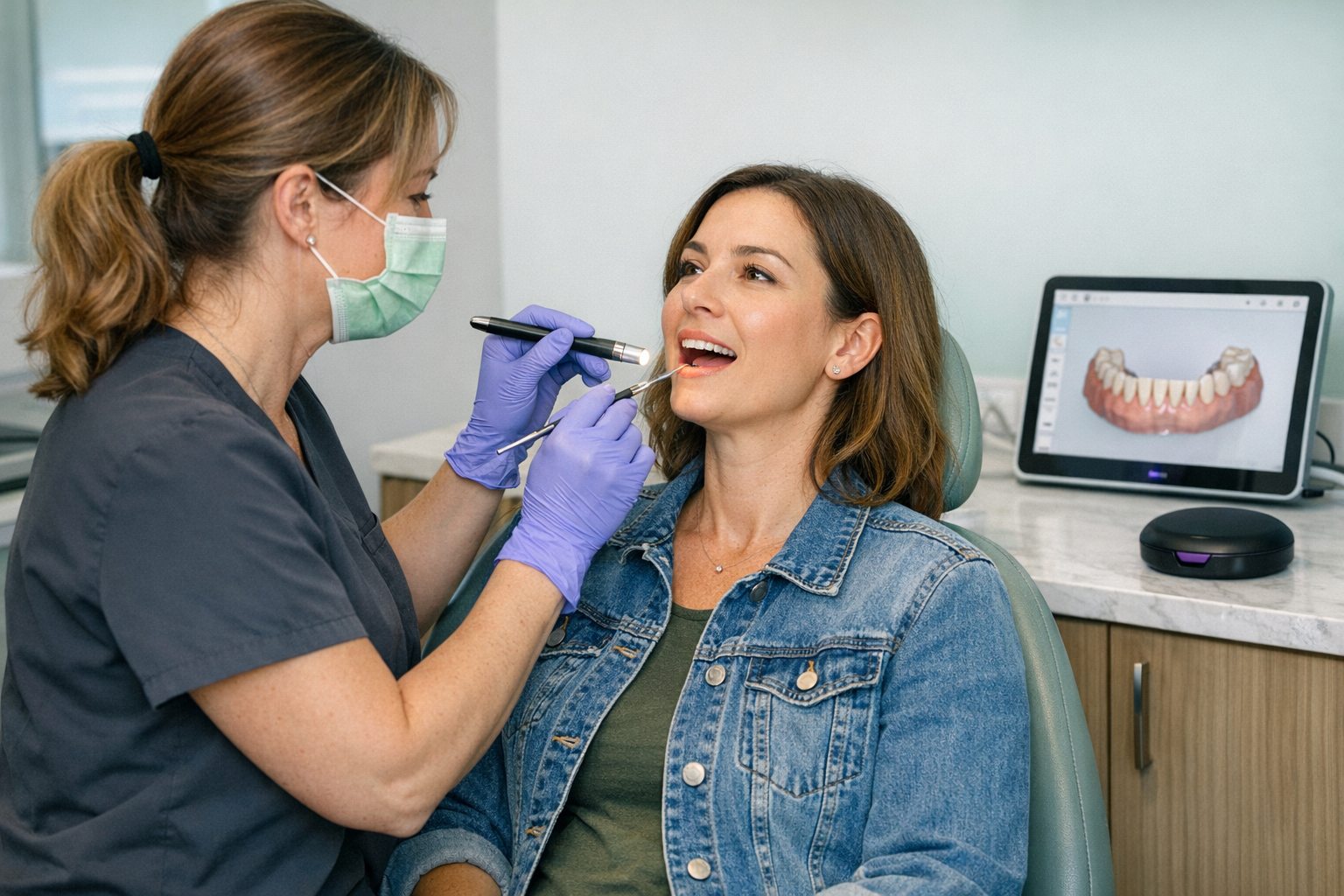
Begin by explaining what you want to change in everyday language. You may be concerned about crowding, gaps, an overbite, an underbite, an open bite, or teeth that look uneven. Your dentist can then examine how your teeth meet and determine whether clear aligners are appropriate for the movement involved. Gresham Advanced Dentistry lists Invisalign for several alignment concerns, but a general service description cannot confirm eligibility for an individual patient.
What exactly needs to move?
Ask which teeth need movement and whether the main concern is appearance, bite function, or both. Ask how the proposed changes may affect chewing and how your teeth meet. A plan should be based on an examination and appropriate records, such as photographs, digital scans, or imaging when needed—not on a quick visual impression.
Hypothetical example: mild front-tooth crowding may require a different plan from teeth that look fairly straight but meet unevenly. Both patients may ask about Invisalign, yet their evaluations and treatment goals could be very different.
Is my oral health ready?
Ask whether cavities, gum problems, damaged teeth, or other concerns should be addressed first. Keeping teeth and gums healthy is important during aligner treatment. If you have bleeding gums, tooth pain, loose teeth, or untreated decay, ask how those issues affect the start date.
A routine dental evaluation can separate an alignment concern from a problem needing earlier care. If you are unsure where to begin, the practice’s broader dental services can help identify the right first step instead of assuming Invisalign is the answer.
Would another option fit better?
Ask for a comparison with traditional orthodontic treatment, dental bonding, veneers, or monitoring. These options solve different problems. Aligners move teeth, while bonding and veneers change tooth shape or color and may not address a bite concern.
Hypothetically, a small chip might be better handled with bonding, while significant tooth movement could call for orthodontic treatment. Gresham Advanced Dentistry’s cosmetic dentistry overview places Invisalign alongside whitening, veneers, bonding, and crowns, making it a useful starting point for comparing choices.
Questions About Daily Commitment, Cost, and the Finish Line
Invisalign is removable, but treatment still depends on following the prescribed wear and change schedule. Ask what your daily routine will involve, how often aligners change, and what may happen if you frequently leave them out. Confirm how appointments, refinements, and retention fit your schedule before committing.

The practice’s Invisalign information describes custom planning, 3D computer imaging, dentist-prescribed aligner changes, and progress checks about every six weeks. Confirm that those details apply to your proposed plan, because timing and steps can vary by case.
Can I manage the routine?
Ask how to handle meals, brushing, flossing, beverages, sports, travel, and special events. You will need a practical way to store aligners when they are removed and clean them according to professional instructions. If you drink coffee, review the guide about enjoying coffee while wearing Invisalign, then confirm the advice for your own plan.
Be honest about your schedule. Hypothetically, someone who travels often or removes aligners for long meetings may need a different conversation from someone with a predictable routine. The goal is to identify obstacles early so the plan matches real life.
What are attachments, refinements, and visits?
Ask whether your plan may use tooth-colored attachments, elastics, or other features to guide movement. Ask how progress will be measured and what happens if a tooth does not track as expected. Additional aligners, sometimes called refinements, may be part of some treatment plans, so ask how that possibility is handled.
Do not rely on a generic timeline. Request a written summary of the proposed steps, expected visits, and factors that could change the schedule. This makes it easier to compare treatment with your work, school, family, and travel commitments.
What will I pay, and how will teeth stay straight?
Ask for the full quoted cost rather than only a starting figure. No standard Invisalign price is published in the supplied practice information, so pricing requires a personalized quote. Request a breakdown of treatment, examination or record charges, retainers, refinements, and other expected fees. Ask how insurance, financing, or membership options may apply and confirm what is included.
Also ask about retention before treatment begins. Your dentist should explain the recommended retainer, wearing schedule, replacement process, and follow-up care. When you are ready, an Invisalign consultation at Gresham Advanced Dentistry can turn these questions into a case-specific recommendation rather than a guess based on photographs or online descriptions.
Invisalign Consultation Questions
How do I know if Invisalign is right for me?
You cannot confirm suitability from photographs alone. A dentist needs to examine your teeth, bite, gums, and overall oral health, then discuss your goals and the movement required.
Do cavities or gum problems need treatment first?
Possibly. Your dentist may recommend addressing active decay, gum disease, pain, or damaged teeth before aligner treatment begins. Ask how current concerns affect your timing.
What should I ask about Invisalign cost?
Request a complete written quote covering treatment, records, retainers, refinements, insurance or financing assumptions, and other charges. The supplied practice information does not publish a standard price, so cost requires a personalized quote.
Are Invisalign attachments always required?
Not necessarily. Your dentist can explain whether attachments, elastics, or other features may help achieve the planned movements in your case.
What happens after Invisalign treatment ends?
Ask about retainers before starting. Your dentist should explain the recommended retainer, wearing schedule, replacement process, and follow-up visits needed to help maintain the result.
Questions About Your Smile?
Our team is happy to help. Schedule a visit with Gresham Advanced Dentistry, and get honest answers and personalized care.