
Dental Implant, Bridge, or Denture: Which Option Fits One Missing Tooth?
Dental Implant, Bridge, or Denture: Which Option Fits One Missing Tooth?
For one missing tooth, a dental implant, bridge, or partial denture may all be reasonable options. The best fit depends on more than appearance. Your dentist will need to consider the health of the neighboring teeth, the condition of your gums and jawbone, your preferred timeline, daily maintenance, and your budget. There is no single replacement that is right for everyone.

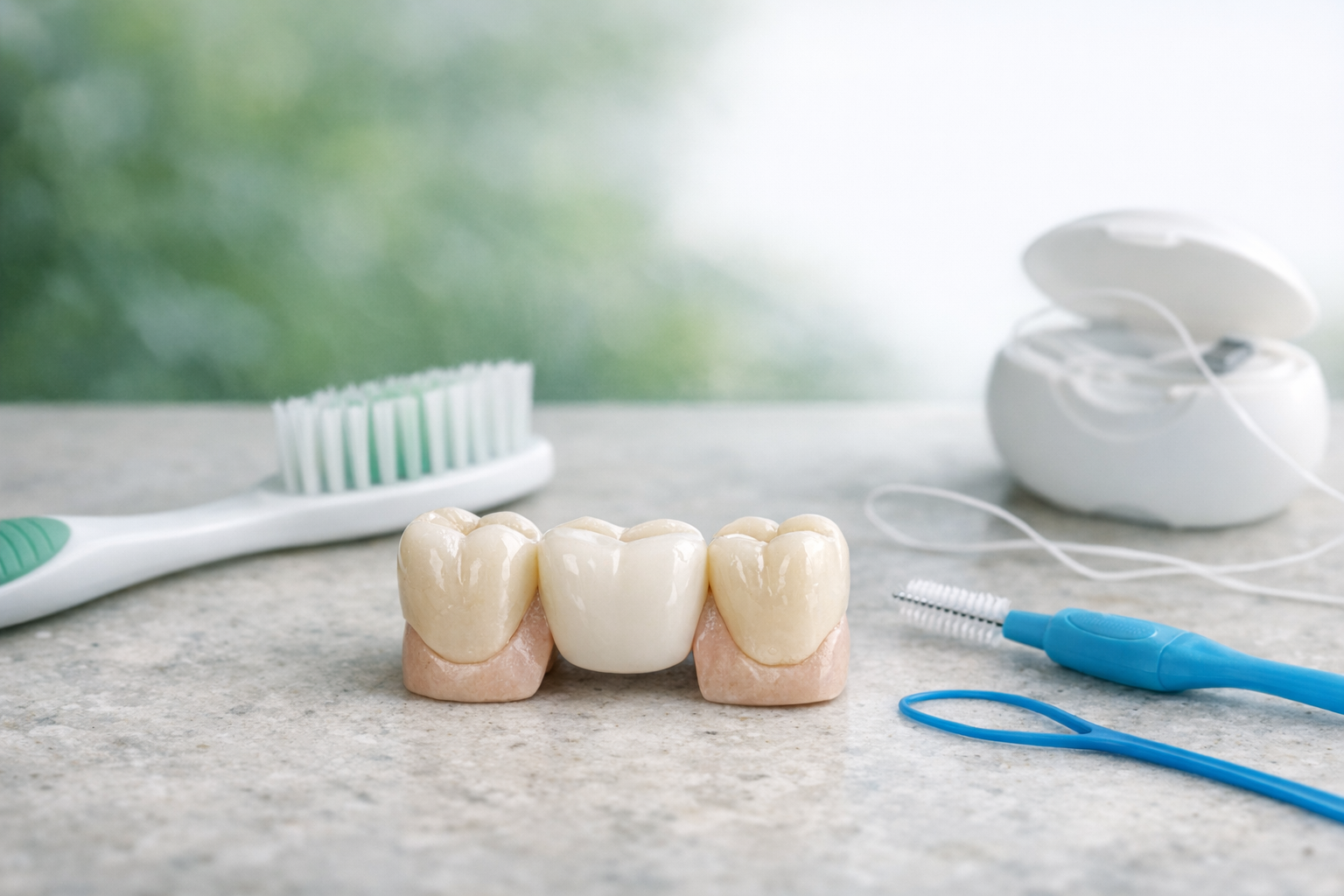
A useful starting point is to compare what each option asks of you. An implant replaces the tooth and its root but involves a surgical process and healing. A bridge is fixed in place and may offer a shorter path for some patients, but it relies on nearby teeth for support. A partial denture is removable and may be a practical choice if you want to avoid implant surgery or need a more flexible option. A consultation and appropriate imaging can help turn those general differences into a personal recommendation.
How the Three Options Differ
Before choosing a replacement, consider the features that matter most to you. Do you want something fixed or removable? Are the teeth beside the gap healthy enough to support a restoration? Can you accommodate a longer treatment process? What type of cleaning and follow-up will you realistically maintain? Writing down your priorities before the consultation can make the discussion more productive.
Dental implant: independent tooth replacement
A dental implant is designed to stand independently rather than use the neighboring teeth for support. It includes an implant placed in the jaw, followed by a replacement tooth after the necessary healing and treatment steps. This can be appealing when preserving the adjacent teeth is a priority. However, candidacy depends on factors such as gum health, available bone, general health, and the details shown during an examination and imaging. An implant also requires a surgical procedure and a long-term cleaning routine. Review the practice’s dental implant information to understand why an evaluation is needed before choosing this route.
Dental bridge: fixed replacement supported nearby
A bridge fills the gap with a replacement tooth attached to crowns or other supports on neighboring teeth. It stays in place, so you do not remove it for meals or sleep. A bridge may fit someone who wants a fixed option without implant surgery and whose neighboring teeth can provide dependable support. The tradeoff is that the supporting teeth become part of the restoration, and cleaning beneath and around the bridge takes attention. Gresham Advanced Dentistry’s dental bridge service can help you prepare questions about support, fit, cleaning, and expected care.
Partial denture: removable flexibility
A partial denture replaces one or more teeth and can be removed for cleaning. It may suit someone who wants a removable solution, wants to avoid implant surgery, or needs an option that can be adjusted as circumstances change. The experience is different from a fixed replacement: the appliance may take time to feel natural, and it needs regular cleaning and professional attention when its fit changes. Ask how the appliance will be supported, how it may affect speaking and chewing, and what adjustments could be needed over time.
A Practical Way to Choose
Do not choose based on price or treatment speed alone. Instead, ask the dentist to compare the options for your specific gap and explain what could change the recommendation. Your first visit should be a shared decision, not a test where you are expected to name a procedure before anyone examines you.

Step 1: Check the foundation
Ask whether the gum tissue, jawbone, and neighboring teeth are healthy enough for each option. If the missing tooth followed an extraction, injury, decay, or infection, ask whether healing or additional treatment affects the timing. Imaging may help the dentist evaluate the area, but the appropriate type depends on your situation. If you have active dental problems nearby, treating those concerns may come before replacing the tooth.
Step 2: Compare daily life and maintenance
Ask what eating, brushing, flossing, and follow-up visits will look like with each choice. An implant and bridge are fixed, while a partial denture is removable. Fixed does not mean maintenance-free: the area still needs careful cleaning and professional monitoring. A removable option may be easier to take out for cleaning, but it must be handled consistently and checked if it becomes loose or uncomfortable. Choose the routine you are most likely to follow.
Step 3: Weigh time, cost, and tradeoffs
Ask for a written estimate that separates the replacement itself from examinations, imaging, preparatory treatment, temporary solutions, adjustments, and follow-up care. If pricing is not available until an evaluation, the office can explain the quoted fees and any payment or insurance questions. Compare the full treatment sequence rather than only the first fee. Also ask how long each option may take in your case and what happens if the plan needs to change.
Hypothetical examples and next steps
Hypothetical example: a patient with healthy neighboring teeth wants an independent, fixed replacement and can manage a longer treatment timeline. An implant may be worth discussing, subject to examination and imaging. Another hypothetical patient wants a fixed replacement sooner and has neighboring teeth that are suitable for support; a bridge may be part of the conversation. A third hypothetical patient prefers something removable or wants to avoid implant surgery; a partial denture may deserve consideration. These examples are not diagnoses. Bring your medical history, medication list, insurance questions, and concerns about comfort to a consultation, then ask the dentist to explain why one option fits your situation.
Frequently Asked Questions About Replacing One Missing Tooth
Is an implant always the best choice for one missing tooth?
No. An implant may be a strong option for some patients, but gum health, available bone, general health, treatment timeline, maintenance preferences, and budget all matter. A bridge or partial denture may fit better in another situation.
Can a bridge replace one missing tooth?
Yes, a bridge can replace one missing tooth when the surrounding teeth and bite provide suitable support. Ask how those teeth will be prepared, how to clean under the bridge, and whether another option would better protect your long-term oral health.
Is a partial denture only for people missing several teeth?
No. A partial denture can be used to replace one or more missing teeth. Whether it is practical for you depends on the gap, available support, comfort preferences, appearance goals, and how consistently you can manage a removable appliance.
How should I compare the cost of an implant, bridge, and denture?
Compare the complete quoted treatment plan, not just the initial fee. Ask about examinations, imaging, preparation, temporary restorations, laboratory charges, adjustments, follow-up visits, and the payment schedule. The office can also explain applicable insurance or financing information.
What should I ask at my consultation?
Ask which options are clinically suitable, what imaging is needed, how long each option may take, how it will be cleaned, what maintenance is expected, what risks or limitations apply, and what happens if the plan changes. Ask the dentist to explain the recommendation in plain language.
Questions About Your Smile?
Our team is happy to help. Schedule a visit with Gresham Advanced Dentistry, and get honest answers and personalized care.